Just before midnight on New Year’s Eve, I heard that Gary had died from complications of early-onset dementia. Fireworks cracked through the night as the world welcomed 2025, but suddenly it all felt hollow.
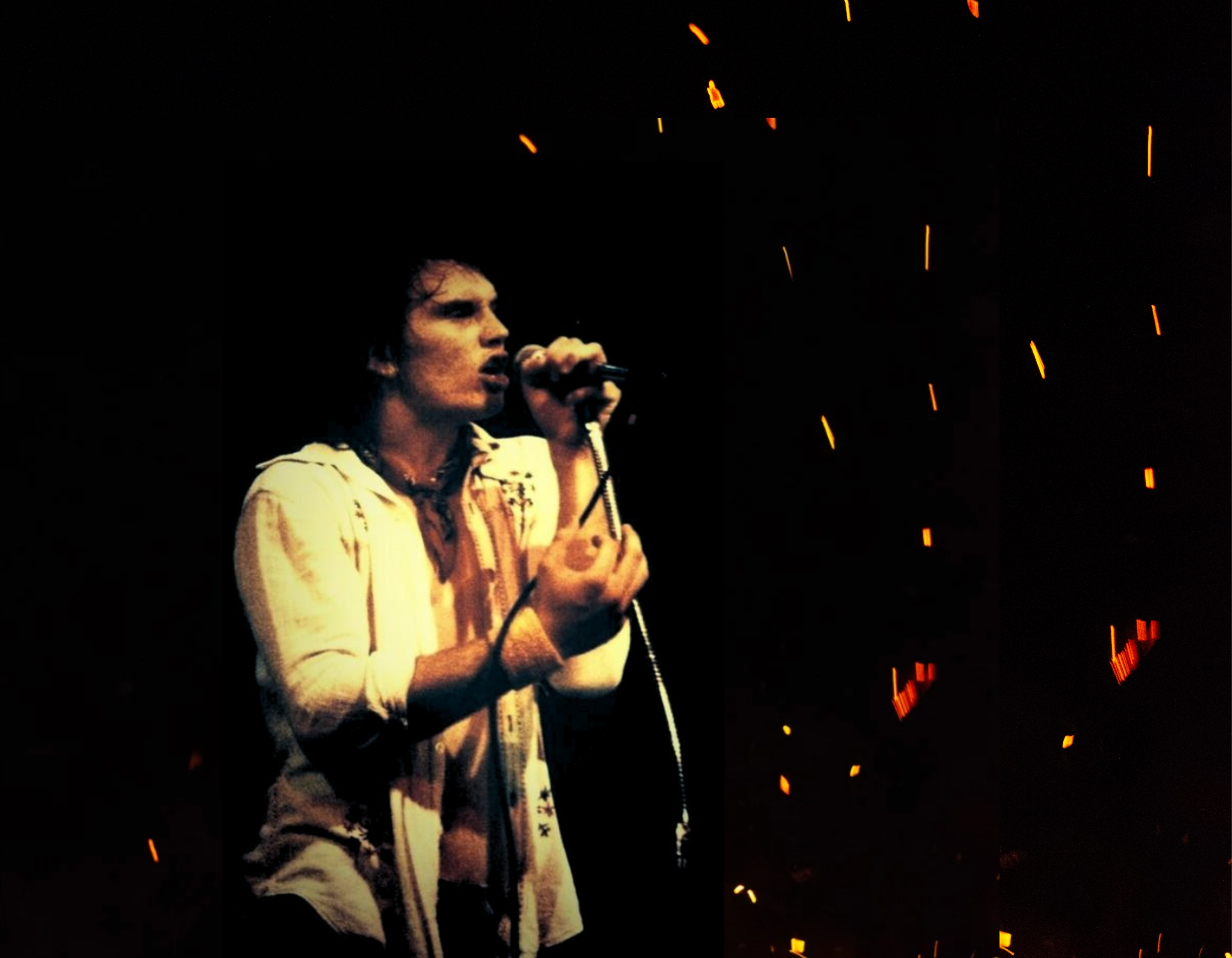
Gary Tyer was my friend. An artist and rock and roller through and through. He had a voice that could pull you into his orbit or launch you into space, whether you were watching him on stage or just hanging out in the backyard, drinking beer and passing around a guitar. He was eccentric in the best possible way—the way artists often are.
Gary and his brother Greg were founding members of a band called Flyte. They opened for acts like Shandi and Eddie Money. The band broke up when Gary and Greg moved on to other things and eventually both joined the military. Years later, in San Francisco, they reunited and started a new rock band called Dirty Skirt. They drew praise from Bay Area producer Peter Miller, who said, “I found real rock and roll again.”
But life caught up with them. Marriage. Family. Grown-up decisions. In 2008, Gary and his wife, Amy, moved to Austin. He reformed Dirty Skirt but renamed it Tyer. They recorded one album, Shackled in Chains. It captured Greg’s searing electric guitar and drums, and Gary’s vocals, bass, and gift for storytelling. In the liner notes, he wrote, “We can never be what we once were, but who wants to go backwards anyway.”
That was the Gary I met—not the young guy in the spotlight, but someone who carried all that history in the way he wrote and sang, the way he talked, the way he lived. We met at a day job that had nothing to do with music, but it wasn’t long before we found common ground in songwriting. I wasn’t officially in his band. I’m an average guitar player on a good day.
But we spent countless weekends in my garage with a twelve-pack of Heineken or a bottle of bourbon. I’d be strumming on an acoustic while he belted out lyrics off the top of his head. I’d fumble to keep up, maybe toss in a melody or a line for a verse. Gary had a way of making you feel like you belonged in his world. Looking back, I think he wanted me there. Maybe he saw something in me that I didn’t.
We wrote a handful of songs together. And by “together,” I mean he’d usually write the first verse, email it to me, and tell me to figure out the next part. One of those songs was called Odds Are Against Me. I’d forgotten about it until I heard he was gone. Then I went digging through old files on my MacBook and found it again.
His first verse:
Without warning one day in the leaves I could see
One life was ending and another being born
As the wind turned breezy
What I once thought was easy
Became another page ripped out and torn
And his chorus:
Looks like the odds are against me
Just some things you can never change
Looks like the odds are against me now
Can’t take back the cards once they’ve been played
At the time, it just felt like fiction—words that sounded good together. But now it feels like something else. I don’t believe in prophecy, but in hindsight, it’s hard not to see it that way. He wrote those lines long before any of us knew the odds he’d be up against, before early-onset dementia came for him.
The chorus was simple and universal. It didn’t sound like defeat so much as recognition—the realization that some battles you just don’t get to win, that some enemies are written into the story long before we even realize they’re there.
My part was the second verse:
Called out your name and the pines replied
With echoes of a memory I can’t leave behind
Your face was fading
As I kept waiting
Staring up at this mountain that I’ve yet to climb
It didn’t mean much to me when I wrote it. I was just trying to match his style. But I can’t help but think that if I’d written it after he died, it wouldn’t be all that different.
We’d talked about recording a stripped-down acoustic album, and Gary wanted Odds Are Against Me on it. I told him I’d figure out the melody someday and we’d finish it together. I didn’t know “someday” would come ten years later, with the thunder of fireworks serving as an overly enthusiastic session drummer who couldn’t keep time.
I quit drinking in 2023, and like a lot of newly sober people, I found it easier to avoid the same bars, the same backyards, the same people. But the truth is, I’d already started pulling away from Gary in the last couple of years before he died. Sobriety just gave me a convenient excuse—one I was all too willing to use to avoid uncomfortable situations.
I couldn’t say exactly what was wrong with my friend, but I knew something wasn’t right. I asked him more than once, and he always brushed it off, said it was just a “little issue going on with his head,” but the doctors “had it under control.”
By the last few times we hung out, it was clear everything wasn’t “under control.” He asked where the bathroom was in my house two or three times in the same afternoon. Mid-conversation, he’d lose his train of thought halfway through a sentence. More than once, he repeated a story he’d told me the night before like it was brand new.
Gary had always been quick-witted and razor-sharp. And it was slipping. I guess I didn’t know how to handle it. I didn’t want to see him like that. So I quietly stepped back, told myself there was plenty of time, that I needed to be focus ed on my own issues. And then time ran out, as it always does.
On New Year’s Eve, I picked up my guitar and started looking for the melody. I recorded a rough demo that night on GarageBand. It wasn’t perfect, and it wasn’t supposed to be. Gary was supposed to sing it. I was just filling in for him. I’m not much of a singer—there’s no way I could bring what he would’ve brought—but it wasn’t about making something flawless. I just felt like I needed to finish something we started, even if no one ever hears it but me.
Gary was an artist in every sense of the word. He found joy and meaning in creating something out of nothing and handing it to the world. He was the kind of person who could pull a song out of thin air and make you feel lucky just to be in the room while it happened.
He was also a good human. A good friend. And I can’t help but feel like I wasn’t there for him at the end. Because I wasn’t.
I’ve talked to his wife, Amy, a few times since he passed. She told me not to beat myself up. Said she was glad I didn’t see him when things got “really bad” at the end. That it’s better my memories of him are mostly from before. Maybe she’s right, but a part of me still feels the weight of not showing up—of hiding behind sobriety as an excuse to avoid something I didn’t want to face.
I keep coming back to that line he wrote in the album liner notes: We can never be what we once were, but who wants to go backwards anyway. And he was right. We can’t go back. We don’t get to reshoot the scene just because we wish we’d acted differently the first time. The past is the past, and all we can do is embrace the present and try to meet the future head-on.
Regret doesn’t change what’s already happened, but it has a purpose. When we let someone down, that awful feeling reminds us we can—and should—do better next time.
Nick Allison is a writer based in Austin, Texas. His work has been published in HuffPost, The Chaos Section, CounterPunch, The Fulcrum, The Shore, Eunoia Review, Dissident Voice, The Political Prism, and a few other places. Ever since discovering the Mac shortcut for the em dash way too late in life, he’s been abusing it—constantly—and has no plans to stop. Also, he secretly enjoys writing his own bio in the third person, probably because it makes him feel a little smarter and more important than he actually is.
Discover more from the chaos section
Subscribe to get the latest posts sent to your email.


 the chaos section