“If there be time to expose through discussion the falsehood and fallacies, to avert the evil by the processes of education, the remedy to be applied is more speech, not enforced silence.”
—Justice Louis Brandeis
I wasn’t exactly Charlie Kirk’s biggest fan. I found him to be an annoying, performative MAGA agitator helping to usher in what I see as an authoritarian, quintessentially un-American movement. Even so, when news broke that someone had shot him while he spoke on a college campus, my first feeling wasn’t schadenfreude but stunned sadness. This might seem like a radical statement in 2025, but… it’s actually possible to hate what someone says and still be saddened when someone else decides to answer with a bullet. There’s a clear line between speech and violence, and blurring it is where democracies get into trouble.
Kirk had a habit of pissing me off, but, hey, so do a lot of other people. And I’m absolutely certain my words and beliefs do the same to them. That’s the tradeoff in a pluralistic society: we aggravate each other, we argue, and then we either let it go or push back, confronting bad ideas with better ones and letting our words do the work in the court of public opinion.
And yet the moment Kirk was killed, a new narrative surfaced, with some voices on the right blaming words for violence. They argued that calling Trump or the MAGA movement “fascist,” “authoritarian,” or “tyrannical” is what caused the assassination, and that such language should be policed. The irony is hard to miss. For years, conservatives mocked the idea that language could wound, dismissing progressives as fragile snowflakes. They scoffed at the notion of “hate speech,” insisting words can’t hurt anyone. Now, some of those same voices argue that words themselves loaded the rifle that killed Charlie Kirk.
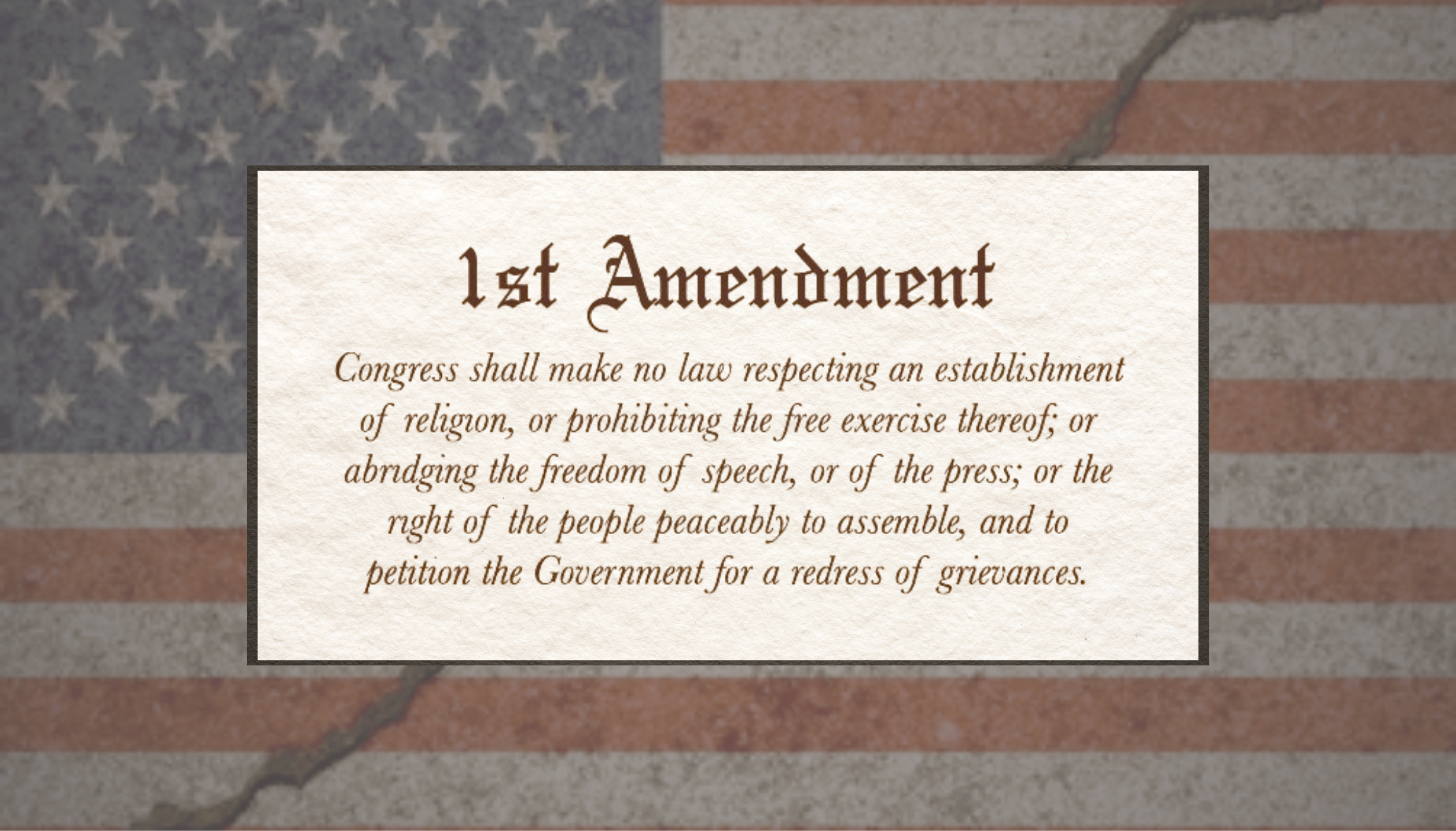
And it didn’t stop there. This wasn’t just pundits or keyboard warriors looking for someone to blame. President Trump and members of his administration have openly floated the idea of punishing speech they deem dangerous, a leap from private outrage, to the state itself making threats. And thats obviously far worse, because the First Amendment’s core purpose is to restrain government power over speech. If the state itself begins policing what can be said, the principle completely collapses.
We’ve already seen glimpses of that collapse. After Trump and FCC allies threatened broadcasters, ABC suspended Jimmy Kimmel for mocking his movement in the wake of Kirk’s death. He celebrated Stephen Colbert’s cancellation, and has used lawsuits and regulatory threats to punish outlets he dislikes. These are tactics straight from the playbook of leaders like Viktor Orbán, who built a media empire loyal to his party while silencing dissent. The warning signs aren’t theoretical.
I’m not naïve enough to suggest that words can’t incite violence. Of course they can. In fact, violence usually begins with words. Rhetoric that dehumanizes or urges people on is dangerous and sometimes deadly. But pointing out authoritarian behavior is not the same as telling someone to grab a gun. There’s a world between calling out administration’s pattern of attacks on courts, the press, or civil rights and actively urging “imminent lawless action.” Thats’s the standard the Supreme Court set in Brandenburg v. Ohio. Incitement isn’t protected but robust criticism is.
And if we’re really going to accuse people of using words to spark political violence, it’s worth noting that the reaction from the far right leaned much closer to that line. Within hours of Kirk’s shooting, posts on pro-Trump forums and social media shouted “THIS IS WAR” and “We’re past words,” while others called Democrats “domestic terrorists” or demanded that “the entire Democrat party needs to fucking hang now.” One user warned the nation was “teetering between a political rupture and civil war,” while another declared, “It’s time to end democracy.” On his War Room podcast, Steve Bannon called Kirk “the America First martyr” and insisted, “We cannot back off. We cannot flinch.” Stewart Rhodes, freshly freed from his Jan. 6 sentence, went even further, when he urged Trump to invoke the Insurrection Act and mobilize veterans as militia leaders. None of this was a direct, imminent call to violence, but it’s definitely the kind of rhetoric that predictably tempts the most unstable listeners to take the worst possible hint.
One of Kirk’s talking points was that if we live in a society with widespread access to firearms, we have to accept some level of gun violence as inevitable, the “price of freedom,” as he put it. I never much cared for the way he framed it, but on principle, I think he was right. And the same logic applies to speech. If we are going to be a country that protects free expression, we also have to accept that some people will twist words into fuel for hatred or even justification for violence. That’s the unavoidable tradeoff we live with, the cost of keeping speech free. The alternative, our government deciding which words are too dangerous, is much worse.
On the far left, some celebrated Kirk’s death, posting the video, mocking him, rejoicing that a man they despised was silenced by a rifle round. It was classless and corrosive, but still protected speech. And we’ve already seen punitive responses: students expelled in Texas, investigations launched against educators for tasteless posts, and even an assistant dean pushed out after a sitting lawmaker urged the university to fire her. Punishing ugly words may feel satisfying in the moment, but it risks eroding the very principle that separates a free society like ours from an authoritarian one.
And for the record, I’ve never agreed with the left’s attempts to “cancel” people, to ban words, or to pretend that shielding ourselves from offensive ideas is the same thing as justice. Free expression doesn’t need safe handling. If the First Amendment only covers speech we like, then it really doesn’t exist at all.
I think it’s also worth noting the selective outrage. Just two months earlier, when a gunman in Minnesota targeted Democratic lawmakers, killing Minnesota House Speaker Melissa Hortman and her husband, and critically injuring State Sen. John Hoffman and his wife, the reaction from many on the right was notably muted. In some cases, prominent Republicans even mocked or politicized the tragedy: Senator Mike Lee quipped, “This is what happens when Marxists don’t get their way,” then deleted it without offering condolences, and Rep. Derrick Van Orden spread false claims about the shooter’s politics. Ideological bloodshed should be condemned, no matter who is targeted, and if politicians are going to claim indignation, they should show it without exception, no matter which side is in the crosshairs.
Political violence is destructive enough on its own. It leaves only grief, division, the illusion of victory, and the certainty of more violence to come. But when we blur the line between speech and violence, or punish people simply for saying things we find cruel or offensive, we set ourselves on a different path of ruin. We build a country where ideas are crimes, where the tools meant to check authoritarianism become weapons to impose it, and where people grow afraid to speak up at all.
The answer isn’t to silence the words we despise, whether through law or professional exile, but rather to oppose them with better words, stronger arguments, and the force of open debate. That’s the counterspeech principle Brandeis set down a century ago. More speech, not enforced silence. The paradox of free expression is that it protects even voices that would strip those protections from others and the moment we start carving out exceptions, the whole principle collapses. If we decide to abandon that now, in the heat of outrage, we might not get another chance.
Nick Allison is a combat veteran and writer based in Austin, Texas. His work has appeared in HuffPost, CounterPunch, The Fulcrum, The Chaos Section, and elsewhere. (@nickallison80.bsky.social)

Discover more from the chaos section
Subscribe to get the latest posts sent to your email.


 the chaos section